As per the rules of the Bar Council of India (Rule 36, Section IV),
advocates and law firms are strictly prohibited from soliciting work or advertising
their services in any format. This website and academic treatise is published for educational and
informational purposes only.
By clicking "I AGREE & PROCEED", you confirm:
✅ No Solicitation: No advertisement or inducement of any sort
has been made by SARFAESI Consultant
to solicit work through this website.
✅ Voluntary Access: You are visiting this site entirely at your
own volition, for your own knowledge and personal reference.
✅ No Attorney-Client Relationship: Information on this site does
not constitute legal advice and does not create an attorney-client relationship.
✅ Independent Counsel: Legal matters require individual
evaluation. You will seek independent legal counsel before relying on any
information here.
📖 Free 16-Page Academic Treatise · Bar Council Rule 36 Compliant
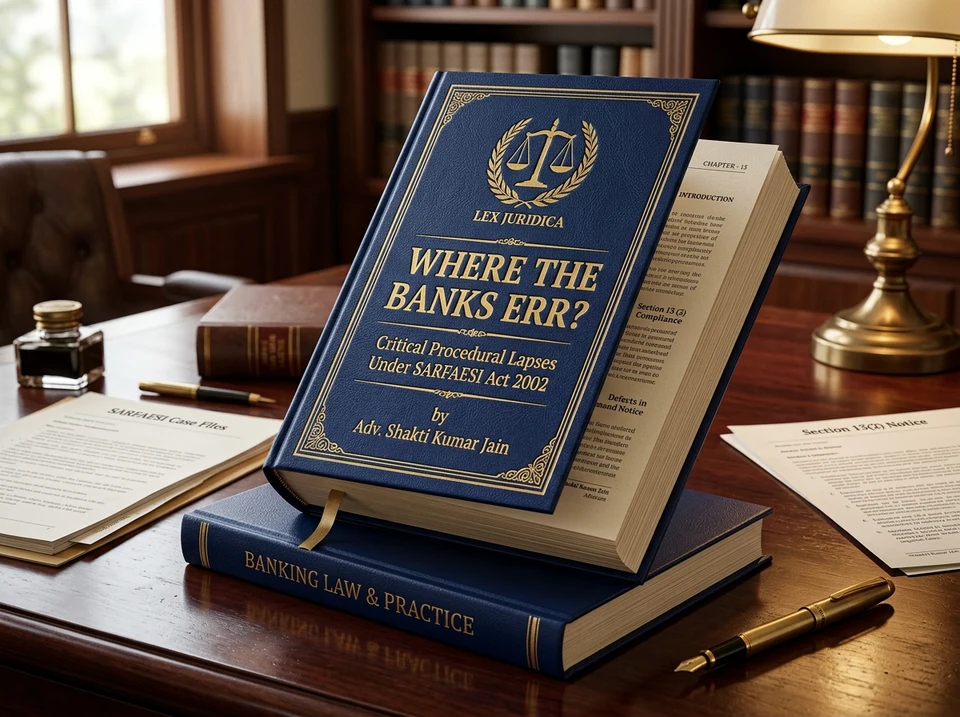
WHERE THE BANKS ERR?
Critical Procedural Lapses & Statutory Defenses Under SARFAESI Act, 2002
Authored by Adv. Shakti Kumar Jain (B.Com. Hons., CAIIB, LL.B. Gold Medallist, Former Senior Manager SBI Stressed Assets Management Branch with 35+ years of banking experience).
Offered completely free of cost for academic awakening and legal education.
👆 Click to Open Interactive 16-Page e-Book
Special Academic Edition · 16 Full Pages
A Forensic Audit of Bank Notice Vulnerabilities
In high-value non-performing accounts (₹5 Crore+), recovery actions frequently collapse or face severe stay orders before the Debt Recovery Tribunals (DRT) because of technical lapses committed by secured creditors during the initial statutory stages.
Spiral Bound Edition (Compressed 15%)
Page 1 of 16
SARFAESI FORENSIC AUDIT · COVER
Page 1 of 16
ACADEMIC TREATISE · FORENSIC AUDIT MONOGRAPH
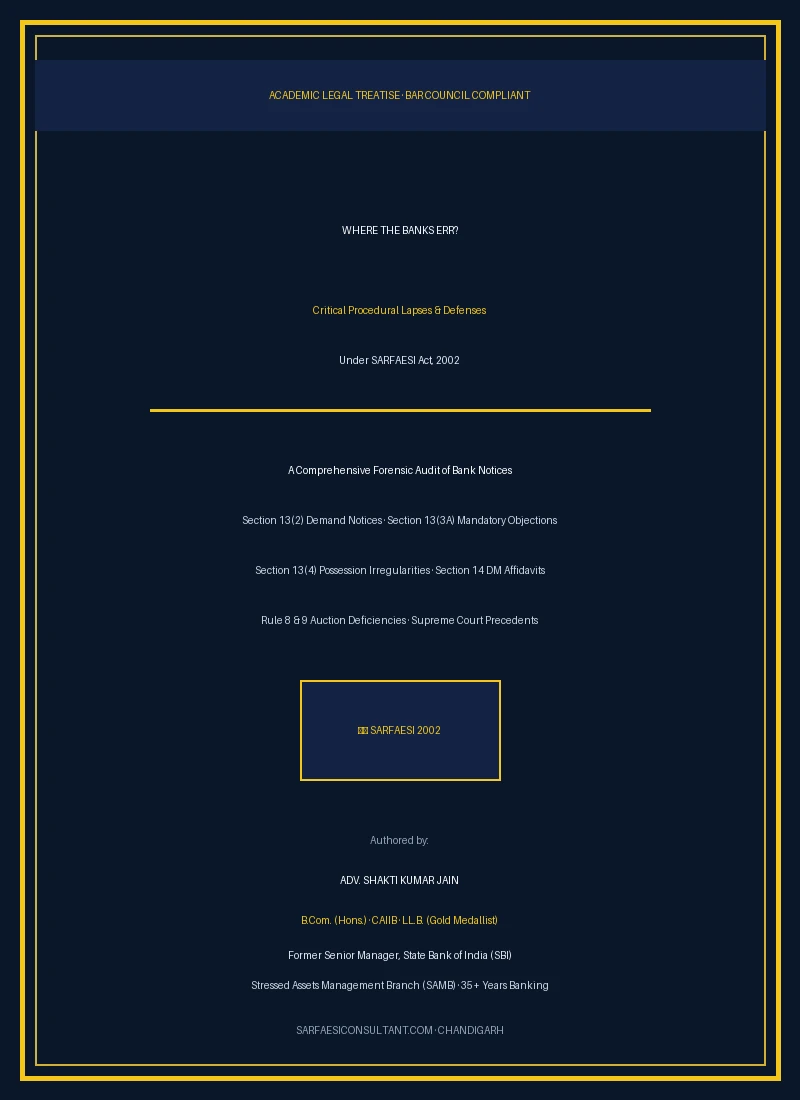
WHERE THE BANKS ERR?
Critical Procedural Lapses & Statutory Defenses Under SARFAESI Act, 2002
Monograph for High-Value (₹5 Cr+) Corporate Accounts & Commercial Mortgages
Authored by: Adv. Shakti Kumar Jain B.Com. (Hons.), CAIIB, LL.B. (Gold Medallist) · Former Senior Manager, State Bank of India (SAMB) · 35+ Years Banking Recovery Experience · Member, Bar Council of Punjab & Haryana
Offered completely free of cost for academic awakening and statutory education in strict compliance with Bar Council of India Rule 36.
During my 35+ years inside the State Bank of India, particularly within the Stressed Assets Management Branch (SAMB) handling large-ticket recoveries, and now in active advocacy before the High Court and DRTs, one cardinal principle has proven immutable:
"The SARFAESI Act arms secured creditors with extraordinary extra-judicial recovery powers, but conditions every coercive step upon strict, unbending adherence to statutory procedure."
Under institutional pressure to achieve quarterly targets, Authorised Officers frequently commit critical procedural oversights during notice drafting, objection disposal, and auction scheduling.
This 16-page monograph provides an actionable forensic checklist of the 14 critical nodes where recovery actions falter.
Institutional Banking Rigor: NPA Classification Prerequisite under Section 2(1)(o)
Chapter 1: NPA Classification as a Jurisdictional Fact
Under Section 2(1)(o) of the SARFAESI Act, a secured creditor cannot invoke enforcement measures under Section 13 until an account is lawfully categorized as an NPA in strict accordance with RBI Prudential IRAC Norms.
Common Procedural Lapses Committed by Banks:
Premature Classification: Calculating 90 days from internal billing dates rather than contractual installment due dates.
Improper Credit Appropriation: Crediting borrower inflows toward unserviced penal charges rather than adjusting overdue principal and regular interest first.
Pending Restructuring: Declaring NPA while ad-hoc limits, LC limits, or formal restructuring requests were pending.
Legal Consequence: If the declared NPA date is mathematically defective, the entire enforcement edifice collapses as void ab initio before the DRT.
SARFAESI FORENSIC AUDIT · CHAPTER 2
Page 4 of 16
Chapter 2: Bypassing the Mandatory MSME Framework
Under Central Government Notification dated 29.05.2015 issued under Section 9 of the MSMED Act 2006, read with RBI circulars, every secured creditor must identify stress in MSME accounts at the SMA-0, SMA-1, and SMA-2 stages.
The Mandatory Committee Process:
Before issuing coercive Section 13(2) notices, the bank must explore a Corrective Action Plan (CAP) through the Committee for Stressed MSMEs:
Rectification: Regularization of overdue accounts with working capital realignment.
Restructuring: Rescheduling tenures or creating funded interest term loans (FITL).
Recovery: Permissible only after the Committee formally certifies revival is unviable.
Judicial Precedents: Where banks jump straight to SARFAESI notices bypassing the MSME Committee, High Courts have quashed the notices as arbitrary and ultra vires.
MSME Restructuring Framework: Mandatory Pre-SARFAESI Corrective Action Plan
SARFAESI FORENSIC AUDIT · CHAPTER 3
Page 5 of 16
Section 13(2) Demand Notice Audit: Mandatory Segregation of Outstanding Dues
Chapter 3: Strict Statutory Mandates of Section 13(2)
The Section 13(2) demand notice is the statutory trigger giving the borrower 60 days to discharge their liabilities. Section 13(3) expressly mandates that the notice must provide full details of the amount payable and the secured assets intended to be enforced.
Lump-Sum Demand Pitfall
Demanding a consolidated single sum without itemizing principal, contractual interest, and penal charges violates Section 13(3).
Penal Compounding Flaw
Capitalizing penal charges into the principal balance violates Supreme Court in Central Bank v. Ravindra and RBI June 2023 norms.
A notice failing Section 13(3) particularity fails to trigger the statutory 60-day clock and cannot form the basis for Section 13(4) measures.
SARFAESI FORENSIC AUDIT · CHAPTER 4
Page 6 of 16
Strategic Chamber Audit: Formulating the 60-Day Statutory Defense Strategy
Chapter 4: Formulating the 60-Day Statutory Strategy
The receipt of a Section 13(2) notice requires immediate tactical action. Borrowers often make the error of waiting until the 59th day or sending casual requests for extension of time.
The 5-Step Forensic Audit Checklist:
Limitation Audit: Verify whether claim is barred under Limitation Act 1963 (3 years from default without acknowledgement).
Section 31(i) Agricultural Exemption: Check if any mortgaged parcel constitutes agricultural land, exempting it from SARFAESI.
Collateral Discrepancy: Verify property descriptions match revenue records and CERSAI registry.
Interest Recalculation: Audit whether the bank compounded interest at unauthorized monthly rests.
Section 13(3A) Objection: Draft a detailed, evidenced objection within the 60-day window.
SARFAESI FORENSIC AUDIT · CHAPTER 5
Page 7 of 16
Chapter 5: The Fatal Section 13(3A) Non-Consideration Error
Following the historic Supreme Court ruling in Mardia Chemicals Ltd. v. Union of India (2004) 4 SCC 311, Parliament enacted Section 13(3A), creating a mandatory statutory duty:
"If a borrower makes any representation or raises any objection, the secured creditor MUST consider such representation or objection and communicate reasoned rejection within 15 days."
Key Statutory Mandates:
Strict 15-Day Timeline: The bank must communicate reasoned disposal within exactly 15 days of receiving the objection.
Application of Mind: Mechanical pro-forma template rejections are invalid. The bank must answer the specific figures and legal objections raised.
Condition Precedent: Disposing of Section 13(3A) objections is an absolute condition precedent before initiating Section 13(4) measures.
Section 13(3A) Mandate: Mandatory 15-Day Reasoned Disposal Before Coercive Action
SARFAESI FORENSIC AUDIT · CHAPTER 6
Page 8 of 16
Chapter 6: Procedural Defects in Section 13(4) Measures
When the 60-day notice period expires and Section 13(3A) objections have been lawfully decided, the secured creditor may resort to measures under Section 13(4), including taking symbolic or physical possession.
Mandatory Procedural Hurdles under Rule 8:
Delivery of Possession Notice: The Authorised Officer must deliver the possession notice in Appendix IV to the borrower and affix it on the outer door of the property.
Mandatory 7-Day Newspaper Publication: Under Rule 8(2), the possession notice MUST be published in two daily newspapers (one in vernacular language having sufficient circulation in the locality) within 7 days.
Independent Panchnama: Taking possession requires drawing up a Panchnama in the presence of two independent local witnesses along with an itemized inventory.
Failure to publish within 7 days or failure to use a recognized vernacular daily renders symbolic possession unlawful before the DRT.
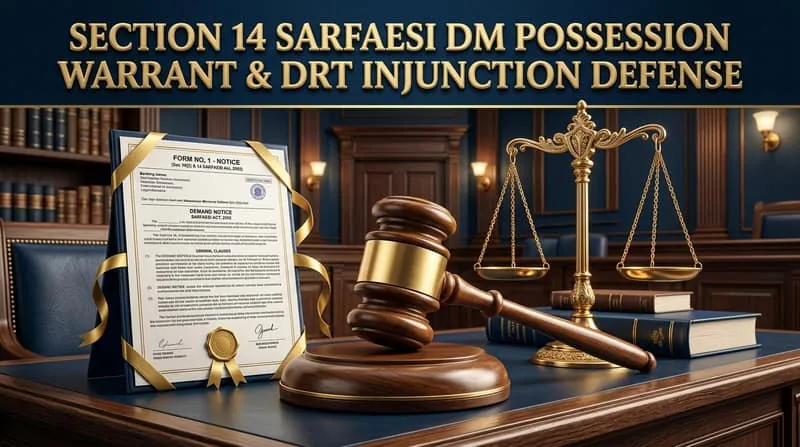
Section 14 Jurisdiction: Non-Adjudicatory Ministerial Assistance of DM / CMM
Chapter 7: District Magistrate Powers Under Section 14
Where the secured creditor seeks actual physical possession, Section 14 empowers the District Magistrate (DM) or Chief Metropolitan Magistrate (CMM) to provide police assistance.
Jurisdictional Limits of the District Magistrate:
The Supreme Court in Standard Chartered Bank v. V. Noble Kumar (2013) 9 SCC 620 clarified the precise boundaries of Section 14:
Ministerial Character: The DM does not act as a civil court and cannot adjudicate disputes regarding loan liability or quantum of debt.
Mandatory Verification Duty: While the DM cannot determine substantive civil rights, the DM is statutorily obligated to verify the factual correctness of the 9-point affidavit submitted by the bank.
Any possession order issued without formal verification of the statutory conditions is ultra vires and void.
SARFAESI FORENSIC AUDIT · CHAPTER 8
Page 10 of 16
Chapter 8: Flaws in Section 14 9-Point Affidavits
By the 2013 legislative amendment, Parliament inserted a mandatory proviso to Section 14(1) requiring the Authorised Officer to affirm an affidavit detailing 9 statutory points under oath:
Full particulars of the aggregate debt and secured assets.
Borrower default and lawful categorization as NPA under RBI norms.
Due service of the Section 13(2) notice on all borrowers and mortgagors.
Factual consideration and 15-day reasoned disposal of Section 13(3A) objections.
Affirmation that no full payment has been received in discharge of debt.
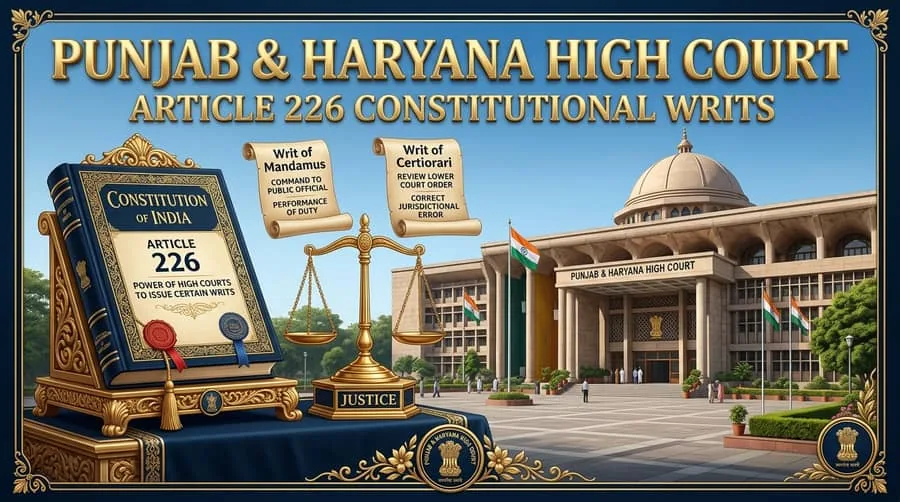
High Court & DRT Quashing Grounds: If the Authorised Officer conceals a pending representation, misstates the date of NPA, or conceals active OTS negotiations, the affidavit constitutes perjury and the DM possession order is quashed under Article 226 / Section 17.
Section 14(1-A) Scrutiny: Quashing DM Possession Orders for False Affidavits
SARFAESI FORENSIC AUDIT · CHAPTER 9
Page 11 of 16
Chapter 9: Rule 8(5) Valuation Rigor and Undervaluation
Before proceeding to sell or auction secured immovable properties, Rule 8(5) of the Security Interest Rules 2002 imposes a mandatory duty upon the Authorised Officer to obtain a valuation report from an approved valuer.
Where Banks Err in Fixing Reserve Prices:
Desktop / Drive-By Valuations: Relying on valuations prepared without physical internal inspection of the property, structural quality, or commercial potential.
Arbitrary Distress Pricing: Fixing the auction reserve price directly at the distress or forced sale value rather than real fair market value.
Stale Valuation Reports: Conducting public e-auctions on the basis of valuation reports that are more than six months to a year old.
A secured creditor acts as a trustee for the mortgagor and must make earnest efforts to realize maximum market value. Arbitrary undervaluation vitiates the auction process.
SARFAESI FORENSIC AUDIT · CHAPTER 10
Page 12 of 16
Rule 9(1) E-Auction Process: Mandatory 30-Day Individual Notice on Mortgagors
Chapter 10: E-Auction Procedural Defects under Rule 9
The public e-auction of immovable property is strictly governed by Rule 8(6) and Rule 9(1). Procedural violations during the auction phase frequently lead to cancellation of sales and forfeiture disputes before the DRT.
Mandatory Procedural Requirements:
30-Day Individual Notice to Borrower: Rule 8(6) requires 30 days individual notice served on borrower/guarantor prior to the first sale. (Subsequent sales require 15 days under amended Rule 9(1)).
Simultaneous Public Notice: The individual notice must be served prior to or concurrently with the public newspaper advertisements.
Statutory Deposit Rules: Successful bidder must deposit 25% within 24 hours (Rule 9(3)), and balance 75% within 15 days (Rule 9(4)).
Mathew Varghese v. M. Amritha Kumar (2014) 5 SCC 610: Rule 8(6) & Rule 9(1) notices protect constitutional rights under Article 300A.
SARFAESI FORENSIC AUDIT · CHAPTER 11
Page 13 of 16
Chapter 11: Right of Redemption and Celir LLP Doctrine
Under original Section 13(8), borrowers could redeem properties right up to the date of execution of the sale certificate. However, following the 2016 statutory amendment, the timeline changed radically.
The Landmark Supreme Court Judgment:
In Celir LLP v. Bafna Motors (Mumbai) Pvt. Ltd. (2023) 9 SCC 587, the Supreme Court definitively settled the legal position:
Extinguishment Milestone: Under amended Section 13(8), the borrower's right of redemption is extinguished on the very date the public auction notice is published in newspapers.
Sanctity of Public Auctions: Once auction notices are lawfully published, borrowers cannot stall proceedings by tendering piecemeal payments.
Protection of Bona Fide Bidders: Third-party auction purchasers who deposit funds acquire indefeasible statutory rights.
Strategic Implication: Borrowers must mount statutory objections and OTS settlements before the auction notice is published.
Chapter 12: Parallel DRT, SARFAESI, and IBC Proceedings
Borrowers frequently assume that if a bank has filed an Original Application (O.A.) for recovery before the DRT under the RDDBFI Act 1993, the bank is barred from invoking SARFAESI measures.
The Transcore Doctrine
In M/S Transcore v. UOI (2008) 1 SCC 125, SC held the doctrine of election does not apply. Secured creditors may pursue both DRT recovery suits and SARFAESI possession simultaneously.
IBC Moratorium Safeguard
Under Section 14 IBC 2016, admission of Section 7/9 freezes all SARFAESI enforcement against the corporate debtor. Section 94/95 filings trigger Section 96 interim stay for personal guarantors.
SARFAESI FORENSIC AUDIT · CHAPTER 13
Page 15 of 16
Section 17 Securitisation Application: 45-Day Window, Zero Pre-Deposit & Injunctions
Chapter 13: Securitisation Application (S.A.) Under Section 17
Section 17 of the SARFAESI Act is the primary statutory judicial remedy available to borrowers, mortgagors, guarantors, or any person aggrieved by measures taken under Section 13(4) or Section 14.
Critical Features of Section 17 Applications:
45-Day Statutory Limitation: The application must be filed before the jurisdictional DRT within 45 days from the date of the impugned measure.
Zero Pre-Deposit Requirement: Unlike an appeal before the DRAT under Section 18 which requires a mandatory pre-deposit of 50% (reducible to 25%), no pre-deposit is required to file a Section 17 S.A. before the DRT.
Powers of Restitution: If the DRT finds that the bank violated statutory rules, it has full power to restore possession to the borrower and award compensation.
Drafting a comprehensive Securitisation Application with evidenced procedural grounds is crucial to securing interim stay orders against physical dispossession.
SARFAESI FORENSIC AUDIT · BACK COVER
Page 16 of 16
SARFAESI Act Implementation — Monograph
Authored by Adv. Shakti Kumar Jain (B.Com. Hons., CAIIB, LL.B. Gold Medallist). Former Senior Manager, State Bank of India Stressed Assets Management Branch (SAMB).
Comprehensive 150-Page Master Edition Available:
45+ High Court and Supreme Court case brief annotations with operational defense takeaways.
Section 13(3A) Model Representation Templates and rejoinder formats.
Section 14 Affidavit Verification Forensic Checklist for criminal defense scrutiny.
⚖️ Bar Council of India Rule 36 Compliant · Academic Reference Only · SARFAESIConsultant.com
About the Author
Adv. Shakti Kumar Jain
B.Com. (Hons.) · CAIIB · LL.B. (Gold Medallist) · Member, Bar Council of Punjab & Haryana
35+ years of institutional banking experience inside the State Bank of India's Stressed Assets Management Branch (SAMB). Now actively practicing as Advocate before the Punjab & Haryana High Court at Chandigarh and Debt Recovery Tribunals across India. Founder & Senior Counsel at Prime Lawyers Chambers and SARFAESI Consultant.
Bar Council of India Rule 36 Compliance Notice: This treatise and 3D e-Book is distributed exclusively for academic enlightenment, intellectual discourse, and statutory education. It does not solicit legal employment or advertise legal services. No client-attorney privilege is established through access to this treatise.